The Competitive Intelligence Hidden in Your Rivals' Outdated Visual Identity
Photo: Alexander Osterwalder, CC BY-SA 2.0, via Wikimedia Commons
Most competitive analysis focuses on the obvious variables: pricing, market share, product differentiation, distribution reach. Design rarely appears on the intelligence dashboard — and that omission is quietly expensive for the companies that make it.
Because while your analysts are tracking your competitors' quarterly earnings and their sales team movements, there is a category of vulnerability being left entirely unexamined. It is visible in the gradient on their website header, the typeface on their trade show booth, the color palette that has not been revisited since the last administration. It is, in short, their design debt — and it may represent the most actionable competitive intelligence available to you right now.
What Visual Stagnation Actually Communicates
Design is not decoration. It is communication. And when a company's visual identity falls significantly behind the visual vocabulary of its industry and era, it is communicating something specific — whether it intends to or not.
To investors, outdated design signals organizational inertia. It suggests a leadership team that is either unaware of how perception shapes valuation, or aware and unable to act. Neither interpretation is favorable. In an era when brand equity is increasingly factored into investment decisions, visual stagnation is a balance sheet problem wearing a creative costume.
To customers, the message is different but equally damaging. Consumers in the United States have become extraordinarily sophisticated visual processors. They do not consciously analyze brand design in most cases, but they respond to it instinctively. An outdated visual identity communicates that a company is not keeping pace — with culture, with technology, with the expectations of the market it is trying to serve. Trust erodes quietly and then suddenly.
To prospective talent, particularly in competitive hiring markets, a brand that looks dated signals an organization that may not be investing in its own future. For companies in technology, professional services, or any sector where talent acquisition is a strategic priority, this dimension of design debt carries measurable cost.
Reading the Market Timing Signal
Not every competitor's visual stagnation represents an equal opportunity. The strategic question is not simply whether a rival's brand looks dated — it is whether the conditions are aligned to make that vulnerability exploitable.
Several indicators suggest that a competitor's design debt is approaching peak opportunity for displacement:
Industry momentum shifts. When a sector undergoes a significant transition — regulatory change, technological disruption, a major consolidation event — the visual language of the industry often shifts alongside it. Companies that fail to update their identity during or immediately following these moments find themselves visually stranded in a prior era, associated with what the industry used to be rather than what it is becoming.
Audience demographic turnover. As purchasing authority migrates to younger decision-makers, brands that were designed for a prior generation of buyers face compounding headwinds. This is particularly acute in B2B sectors, where the visual formality that resonated with buyers in their fifties may actively repel buyers in their thirties.
Competitive silence. When a rival is absorbed by internal restructuring, a leadership transition, or a crisis management situation, their capacity to invest in brand development is typically constrained. That constraint is a window. The company that refreshes its visual identity during a competitor's period of inward focus captures share of attention precisely when it is most available.
Post-merger identity confusion. Mergers and acquisitions frequently produce visual identity chaos — two brand systems awkwardly stitched together, neither fully committed to. Customers of the merged entity often experience this as disorienting. A confident, coherent competitor brand becomes disproportionately attractive during this period.
The Playbook for Strategic Design Timing
Identifying the opportunity is only the first step. Capitalizing on it requires a disciplined approach to design investment and market positioning.
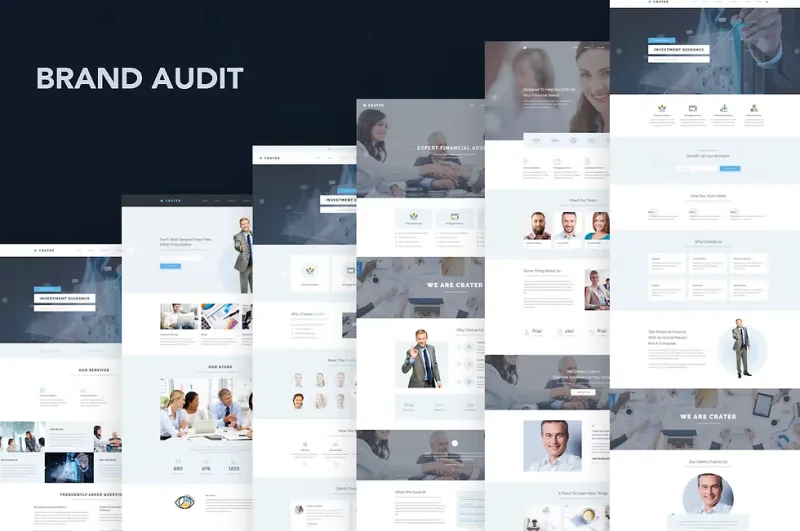
Audit the competitive visual landscape before you audit your own. Most brand refresh projects begin with an internal review — what do we look like, what do we want to look like, what has changed about our business? This is a reasonable starting point, but it is incomplete. A thorough competitive visual audit, conducted with the same rigor applied to any other market analysis, reveals the positioning territory available to you and identifies the visual language that is currently unoccupied in your category.
Time the reveal to maximum market impact. A brand refresh that launches during a period of industry transition captures attention that would not be available during a stable period. Industry conferences, fiscal year transitions, and the aftermath of major sector news cycles all represent amplification moments — times when the market is already paying attention and a confident new visual identity can command disproportionate notice.
Make confidence the primary visual message. The most effective competitive design refreshes are not simply updates — they are assertions. The visual language communicates that this organization is moving forward with clarity and conviction. Contrast this with a competitor whose visual identity communicates uncertainty or stasis, and the market positioning effect is immediate.
Connect the visual refresh to a broader strategic narrative. Design timing works as a competitive weapon only when it is integrated with a clear business message. The refresh should not simply announce that the company looks different. It should announce what the company is becoming — and why that matters to its customers, partners, and the market at large.
Design Investment as Market Timing
The conventional framing of design investment positions it as a cost to be managed — a periodic expense that the organization incurs when the brand has deteriorated sufficiently to require attention. This framing is strategically limiting.
The more accurate and more useful framing is that design investment is a market timing instrument. The question is not whether to invest, but when — and the answer to that question is determined not by internal aesthetics fatigue but by external competitive conditions.
When your competitor's visual identity is signaling weakness to the market, and your organization responds with a confident, coherent, strategically positioned brand refresh, you are not simply updating your look. You are capturing market attention, repositioning against a vulnerable rival, and communicating organizational momentum at a moment when the contrast is most visible.
That is not a design decision. That is a competitive strategy that happens to be expressed through design.
CBM Design Group works with organizations across the United States to identify these windows of opportunity and develop the visual identity systems that allow them to move decisively when the market is ready to notice. Because in competitive markets, timing is not everything — but it is far more than most companies realize.